
“Custom” often gets blamed for delays in the manufacturing process. In practice, most slowdowns start with missing details at the quote stage, not the build. Our fix is simple: standardize what can be standard, gather the right info once, and run a repeatable process from engineering to install. It’s how we scaled SKU coverage quickly while holding quality and install predictability.
If you sell Freightliner, Peterbilt, Kenworth or mixed fleets, the playbook doesn’t change — start with the five, add photos, and let us handle the rest. Custom becomes a checklist, not a slowdown.
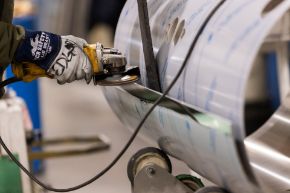
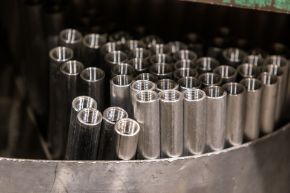
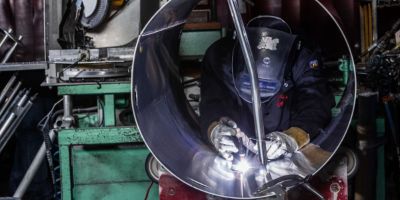
Here’s how we make ordering simple and manufacturing right. First, we map the spec — chassis, envelope, mounting points and any step requirements — so what’s quoted is what gets built. Engineering turns that into drawing packages. On the floor, robotic welding, fiber laser cutting and deep-draw forming lock in consistency. Every aluminum fuel tank is pressure tested and reviewed. Any unit with a 2" 11.5 TPI fill neck ships with a brass cap so the truck can bolt up and go. The result: cleaner quotes, fewer callbacks, faster installs.
Only after the scope is clear do we move to the five questions that eliminate rework:
1) Driver or ditch side?
Side dictates port orientation, bracket layout and how crossover lines route. Get it right and equalization behaves as designed.
2) Cylindrical or rectangular — and does it need a step?
Shape drives the envelope. If a step is required, we confirm whether it’s a true step tank or a strap-mounted step on a round tank.
3) How does the step mount — to the tank or to the straps?
On many rectangular Freightliner tanks the step bolts to welded bushings in the tank. Others hang off the straps. A quick check avoids surprises the OEM number may not spell out.
4) Where’s the fill neck — front, center or rear?
Fill location affects clearance with DEF, steps and handrails. Call it early so we place it where the truck needs it.
5) What’s the crossover layout and sender count?
Freightliner commonly runs a high-level crossover with weld-in tubes — draw at the rear (½" NPT), return at the front (⅜" NPT) — and often a single sender across dual tanks. Confirming this keeps gauges and equalization predictable.
Pair those five answers with a few photos — top, front, rear, mount points, sender, crossover, step interface — plus a quick measurement worksheet. We’ll return a build-ready quote and an aluminum fuel tank that shows up ready to install.
If you’re ready to make custom simple, reach out. Send the five answers and a few photos — we’ll return a clean spec and a build-ready quote.